
To please both the planet and shareholders at the same time, firms must travel a triangular path.
Whatever else they may be, environmental, social, and governance (ESG) initiatives are very often an image-building exercise. Business leaders hope that by being seen to put ethical responsibilities over profits, they will reap profits anyway as a byproduct of reputational gains. It stands to reason, then, that no conversation about the “business case” for ESG would be complete without involving society’s chief reputational brokers—i.e. the media.
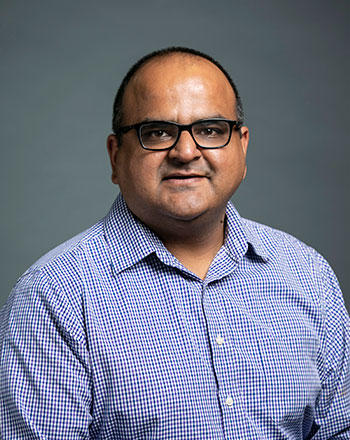
New published research from Saurabh Mishra, area chair and professor of marketing at the Costello College of Business at George Mason University, confirms the media’s pivotal role in influencing ESG profitability.
Forthcoming in the Journal of Business Research, the paper was co-authored by Shekhar Misra at University of Galway, Ireland.
The researchers analyzed ESG performance from the Sustainalytics database, media sentiment from the RavenPack news analytics database, and financial data (including advertising budgets) for 452 firms over the period 2009-2018.
This data-set allowed them to chart the triangular path by which “doing good” (for society and the planet) resulted in “doing well” for the firms in question.
To start with, only the “E” in ESG had any direct positive impact on financial performance—and a muted one at that. Of the three metrics examined—idiosyncratic risk, abnormal returns and Tobin’s Q—only idiosyncratic risk responded favorably to raw, unmediated environmental performance.
The “S” and “G” had either no direct positive effect, or a negative effect upon financial performance.
“You can imagine the E, S, and G would not have the same effect on all stakeholders,” Mishra observes. “Governance, being a little more internal, might have more positive impact on employees, but not necessarily on the outside world. Social kind of falls in the middle—it could be either internal or external.”
With media sentiment, there was a similar disparity. “Greening” efforts tended to drive more positive media coverage for the firm, which translated into higher financial performance. Social and governance initiatives made no significant difference to the media conversation.
But not all eco-conscious firms benefited equally from this media-made halo effect. Those that spent more money on advertising—not necessarily promoting their ESG activity, but advertising in general—saw a greater improvement in media sentiment.
Crucially, Mishra’s data-set included neither specific examples of media coverage nor information about the recipients of advertising spend. The research, therefore, does not suggest the presence of an ethically problematic quid pro quo.
“It’s possible that media simply follow firms [with high advertising budgets] more closely,” Mishra says. “They recognize their efforts more. Everything they do becomes more visible, which kind of magnifies the effect that we’re seeing.”
For Mishra, the findings help clarify contradictions about ESG and its potential payoffs. “If you look at some of the meta-analyses that have been done, the consensus is that ESG’s effect on shareholder wealth is not there, or it’s weakly positive. At the same time, there is a lot of variation. Some firms see a lot of upside and some don’t.”
It’s not, then, that there isn’t a good “business case” for ESG activity. But that case may be more contingent on external factors (such as media sentiment) than many previous researchers believed.
If so, ESG may be most financially successful as part of a diverse strategic portfolio that could encompass advertising spend and possibly other areas ostensibly unrelated to environmental sustainability.
“Advertising researchers talk about a stock effect,” Mishra explains. “Advertising stock builds over time. You have to continually advertise, otherwise that stock starts going down. So if you’re advertising substantially, you get more bang for the buck from investing in the environment.”
But because so much remains unknown about the various factors that help determine ESG’s profitability potential, Mishra cautions against dismissing the “S” and “G” too quickly, despite their apparent irrelevance in this particular study.
“I would hate to say that firms should not invest in social and governance,” Mishra says. “Maybe if you look at some other stakeholder measures—employee productivity measures, for instance—they move the needle there. Because, after all, there is variation in the data, and no one paper can look at every relevant factor. But if your objective is to move media to be more positive towards you, environmental focus is your best bet.”
“I would hate to say that firms should not invest in social and governance. Maybe if you look at some other stakeholder measures—employee productivity measures, for instance—they move the needle there. Because, after all, there is variation in the data, and no one paper can look at every relevant factor. But if your objective is to move media to be more positive towards you, environmental focus is your best bet.”
— Saurabh Mishra, area chair and professor of marketing at the Costello College of Business at George Mason University